Founded in 1978 by Modernismo Publications, Ltd., the same publishers as Mandate and Playguy, Honcho, akin to its peers, began with a wide selection of articles, interviews, and showcases which strove to establish and perpetuate a gay identity as the liberation movement continued throughout the decade; however, as time progressed, many of these elements, like those in similar publications, were reduced to grant more space to photo spreads. The October 1993 issue of Honcho, broken into two parts, exemplifies this factor. Although the magazine still possessed advice columns and erotic fiction, the majority of its pages were devoted to homoerotic imagery. In the first half, the sexual advice of Larry Townsend and two short stories – “The Barman” (a tale of submission and spanking in a local tavern) and “Bedknobs and Bondage” (about a man’s encounter with sadomasochism in the French Quarter of New Orleans) – are accompanied by the photo spreads titled “Bear Cub in Training,” “Ranch Hand Seeks Ranch Man,” and “Workin’ Up a Sweat.”


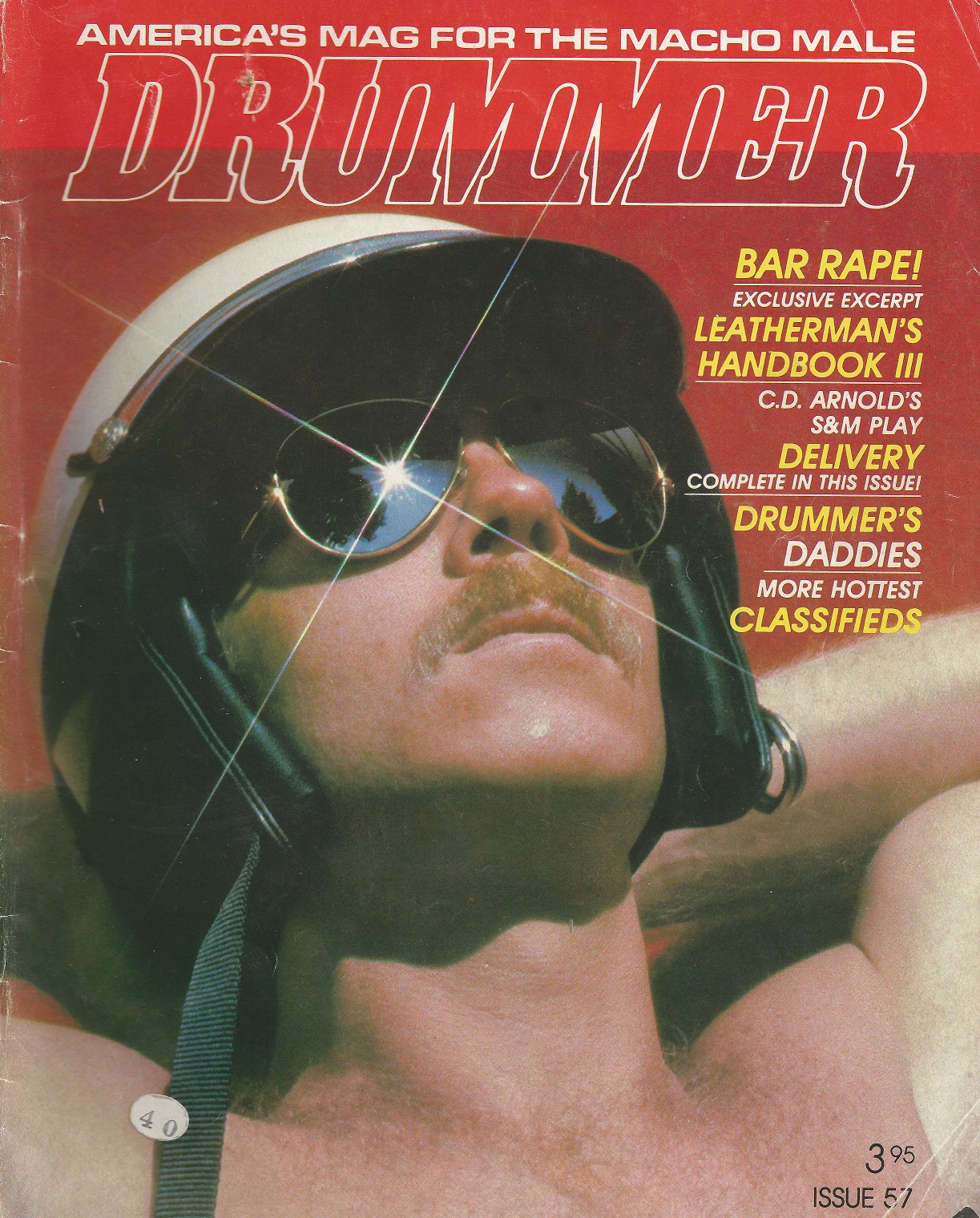
In 1975, John H. Embry and Jeanne Barney established Drummer. While major homoerotic publications – Blueboy, Honcho, Mandate, and Playguy – focused on the creation of a mainstream gay culture, Drummer concentrated on establishing and maintaining the leather subculture blossoming during the era. Although not the only leather magazine, Drummer’s popularity made it the only American version of its kind to see international release and, due to this factor, made it a major influencer in the spread of masculine ideals and the leather lifestyle. Both of these elements, in turn, can be seen within the October 1982 issue, which features a photo comic about sadomasochism in a bar, the butch Drum, and C.D. Arnold’s one-act play “Delivery” (a surreal exploration of bondage, inner turmoil, and sexuality).
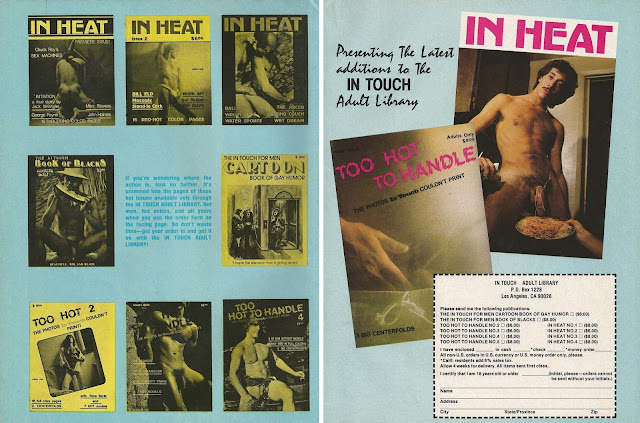
In Touch experienced a prosperous career that ran for over three decades and witnessed the creation of Jerry Mills’ comic strip “Poppers” and the rise of John Calendo as an editor. Akin to its peers in the 1970s, including Blueboy, Honcho, Mandate, and Playguy, In Touch focused on the development of a gay culture through articles concerning community issues, showcases of artists and influential figures, and displays of a uniquely gay fashion; however, during the 1980s and 1990s, the magazine, like its counterparts, abandoned much of these elements in favor of longer photo spreads and fuller classified advertisements. The September/October 1978 issue, which has been broken into two parts, presents the publication in its earlier stage as, along with its brethren, it aimed to establish and maintain a gay cultural identity. In the second half (see the first half here), photos of model Juan Estiban are accompanied by articles on the art of Leonardo da Vinci and the music of the Alessi brothers, a glimpse into Los Angeles’ Pride Parade, and advertisements for In Heat magazine, Lube lubricant, and the film Ramcharger.