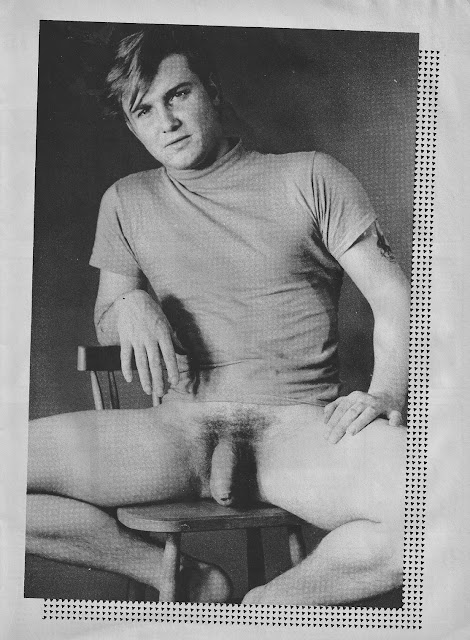
In 1968, Shan Sayles purchased the rights to the homoerotic novel Song of the Loon with the endeavor to launch a series of softcore films and hired Scott Hanson as director and Joe Tiffenbach as cinematographer. Hanson and Tiffenbach, who had worked together on the short film The Closet, found the sensationalized romanticism of Song of the Loon excessive and aimed to masculinize the production; however, filming was wrought with problems and it shut down after only three weeks, with a haphazardly edited version released in 1970 to surprisingly rave reviews. Despite the fiasco, Tiffenbach remained an influential force in the gay community, founding the anti-circumcision group the Uncut Society of America with Bud Berkeley, publishing Foreskin with Berkeley in 1984, and contributing photos to homoerotic magazines like Drummer and Uncut. This May 1987 issue of Uncut (which has been broken into two parts) features one of Tiffenbach’s models, Terry Long. Also in the first half are spreads of Michael Alvise, Bobby Bare, Klaus Boller, Paul Knight, Tab Sands, and Dave Turner.
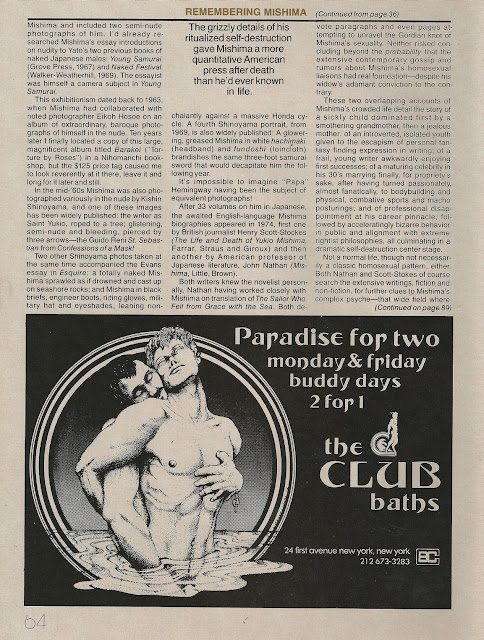
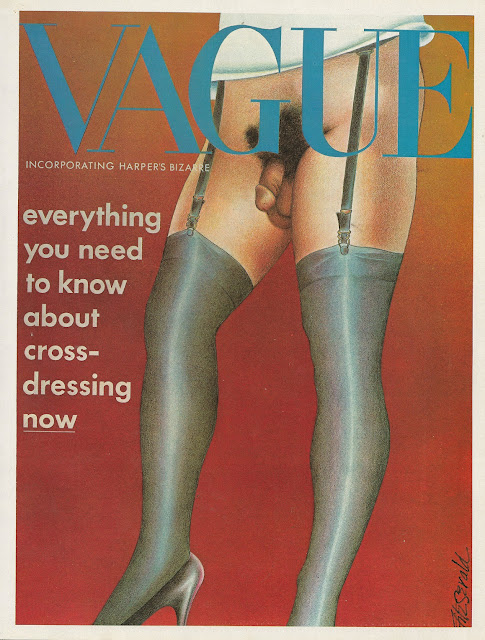
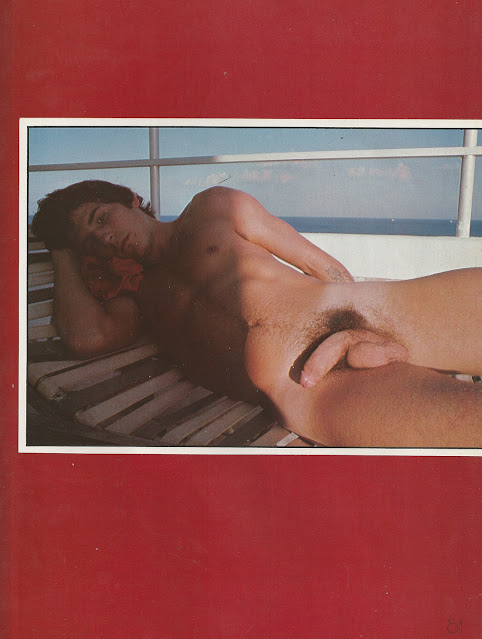
From the quick wit of Bette Davis to the tenacious sexuality of Mae West, powerful female actresses have, according to M.D. Sterling, provided gay men a sense of identity. Sterling’s argument, contained in the April/May 1977 issue of Blueboy (which has been broken into two parts), is among many that attest to the role Hollywood camp has served in building a unique homosexual persona. Yet, Sterling’s article is not the only element within the publication which addresses the community’s rising sense of self: there is also a historical glimpse into the sexual practices of pirates and an homage to Japanese novelist Mishima. In the second half (see the first half here), the texts on Mishima and pirates are paired with a photospread titled “Pick Up” and a parody of magazine covers.
From the quick wit of Bette Davis to the tenacious sexuality of Mae West, powerful female actresses have, according to M.D. Sterling, provided gay men a sense of identity. Sterling’s argument, contained in the April/May 1977 issue of Blueboy (which has been broken into two parts), is among many that attest to the role Hollywood camp has served in building a unique homosexual persona. Yet, Sterling’s article is not the only element within the publication which addresses the community’s rising sense of self: there is also a historical glimpse into the sexual practices of pirates and an homage to Japanese novelist Mishima. In the first half, Sterling’s text is paired with a photospread on odd sex, advice on how to make anal intercourse less painful, and a celebration of the centerfold.